Zuletzt aktualisiert: 18. Oktober 2026
What is changing on the Premium Plan?
On August 12, 2026, six features moved from Premium-Tarif to Enterprise-Tarif. Organizations that were already on the Premium Plan kept access to those features at the time.
Access runs until your organization's first subscription renewal on or after December 1, 2026. From your renewal date, the six features require the Enterprise Plan. Two usage limits also apply to every organization on these plans. The limits cover the number of API calls and the number of Integration Builder tasks your organization can run each month.
Organizations affected
Your plan | Your feature access |
|---|---|
Premium Plan or trial, held on August 11, 2026 | Six features move to the Enterprise Plan at your first renewal on or after December 1, 2026. |
Premium Plan or trial, started on or after August 12, 2026 | No change. Your organization has had the current Premium Plan feature set since it signed up. |
Enterprise Plan | Feature access stays the same. Two usage limits apply. |
Free Plan | Stays the same |
Timing for your organization
Your features change on the date of your organization's first subscription renewal that falls on or after December 1, 2026. Each organization changes on its own renewal date, and December 1, 2026 is the earliest of those dates. For example, if your subscription renews in March 2027, your features change in the same month.
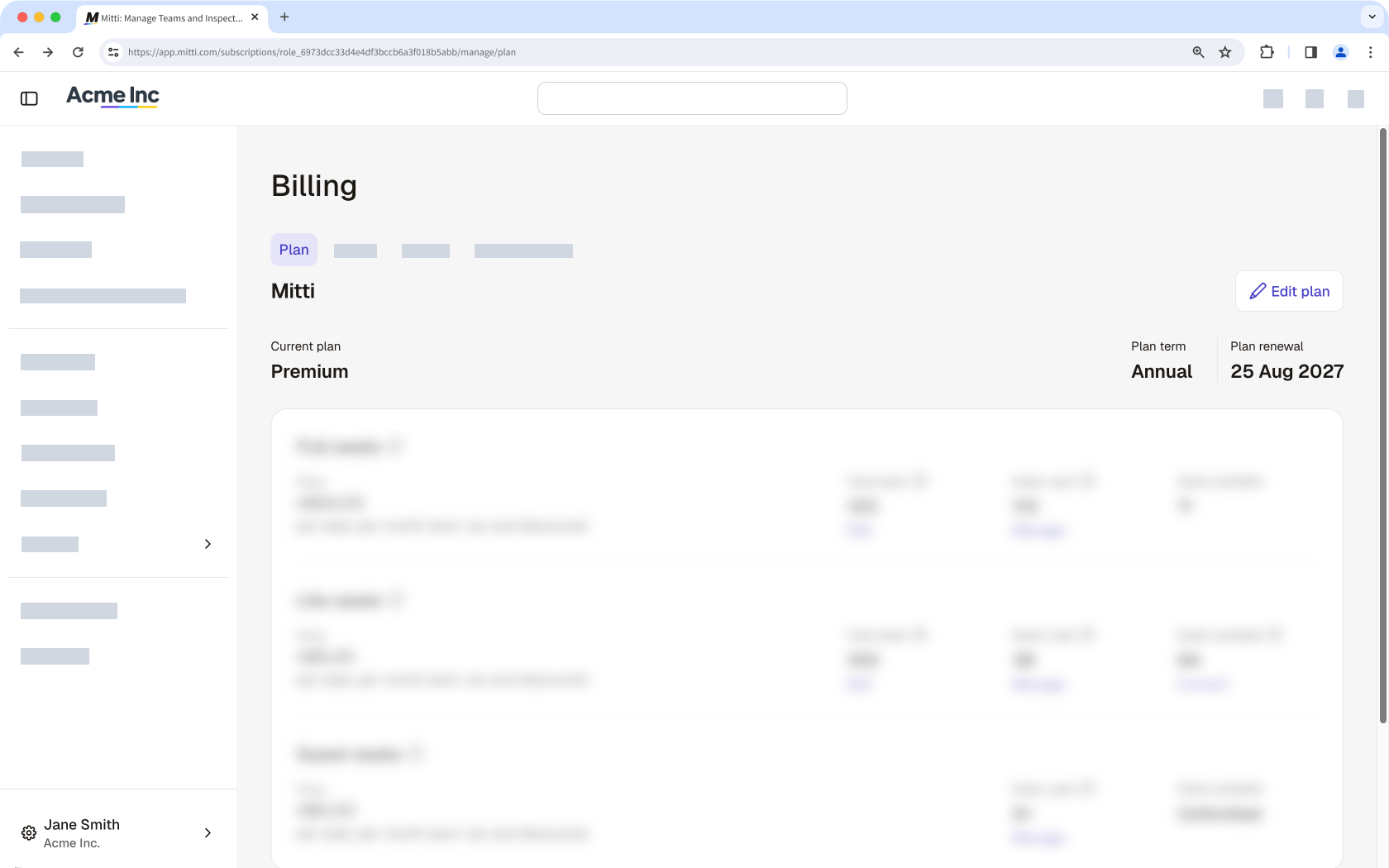
Features moving to Enterprise Plan
From your renewal date, each of these features requires Enterprise Plan. While Premium Plan keeps the manual equivalent where one exists.
Feature | Premium Plan from your renewal date |
|---|---|
Group membership is managed manually. Membership rules require the Enterprise Plan. | |
Site membership is assigned manually. Membership rules require the Enterprise Plan. | |
Personalized mode stays available, including the default layout that applies to users who keep it. Organization-managed mode requires the Enterprise Plan. | |
System for Cross-domain Identity Management (SCIM) provisioning (opens in new tab) | Users must now be added and managed in Mitti directly. Automatic provisioning from your identity provider requires the Enterprise Plan. |
"Allow SSO and Native Login" stays available. "SSO login only" and "SSO for named domains" require the Enterprise Plan. Organizations using either option move to "Allow SSO and Native Login". | |
History is kept for 30 days, against 180 days on the Enterprise Plan. CSV export and the activity log API data feed require the Enterprise Plan. |
Die Änderung betrifft alle sechs Funktionen, unabhängig davon, ob Ihre Organisation diese derzeit nutzt oder nicht.
Bestehende Regeln, Verknüpfungen und Einstellungen
Ihre Konfiguration wird zum Verlängerungsdatum nicht gelöscht. Die einzelnen Funktionen ändern sich wie folgt.
Funktion | Was passiert mit Ihrer Konfiguration? |
|---|---|
Regelbasierte Gruppen- und Standortzugehörigkeit | Ihre Regeln gelten nicht mehr, und Sie können keine Regeln mehr erstellen oder bearbeiten. Die Mitgliedschaften, die durch Ihre Regeln zuletzt erstellt wurden, bleiben bestehen und werden direkt zugewiesen. |
SCIM-Bereitstellung | Die Bereitstellung wird beendet und der Einrichtungsbildschirm wird ausgeblendet. Benutzeränderungen in Ihrem Identitätsanbieter werden nicht mehr an Mitti weitergeleitet. |
SSO-Anmeldeoptionen | Wenn Ihre Organisation „Nur SSO-Anmeldung“ oder „SSO für benannte Domänen“ verwendet, wird dies auf „SSO und native Anmeldung zulassen“ umgestellt. Ihre Benutzer können sich mit beiden Methoden anmelden. |
Von der Organisation verwaltete Navigation | Ihre Organisation wechselt in den personalisierten Modus. Administratoren können das Standardlayout weiterhin bearbeiten, das für Benutzer gilt, die es beibehalten. |
Aktivitätsprotokoll | Der Verlauf, der älter als 30 Tage ist, wird nicht mehr angezeigt. |
Häufig gestellte Fragen
Brauchen Sie weitere Hilfe?
War diese Seite hilfreich?